CleaningOpsPro may earn a commission from affiliate links in this article. Our recommendations are based on editorial merit, not affiliate compensation.
Airbnb turnovers are the fastest-growing niche in residential cleaning, and the math is straightforward. There are over 8 million active Airbnb listings worldwide, with 73% charging a cleaning fee, according to AirROI’s analysis of 2.4 million listings. Every one of those listings needs a cleaner who can deliver hotel-level results in under an hour on a schedule that changes daily. Most residential cleaning companies won’t touch that kind of turnaround pressure. That’s exactly the gap you fill.
This guide covers the pricing structure hosts expect, the room-by-room checklist that earns five-star reviews, and how to build a real business once you’re past your first handful of properties.
Why Airbnb Cleaning Is Different
If you’ve run a residential maid service, Airbnb turnovers will feel familiar but faster and more rigid. Four things separate this niche from standard house cleaning.
Tight turnaround windows. Most hosts have a checkout at 11:00 AM and a check-in at 3:00 or 4:00 PM. That gives you a four-to-five-hour window, but subtract drive time and you’re often working with 45 to 90 minutes inside the property. There’s no rescheduling. A missed turnover means a guest arrives to a dirty unit, and your host gets a one-star review.
Restocking is part of the job. Standard residential cleaning doesn’t include restocking toiletries, replacing coffee pods, or folding decorative towels to match a listing photo. Airbnb turnovers do. Hosts expect you to manage a supply inventory and flag when items are running low.
Photo-ready standards. Hosts photograph their properties for listings, and guests compare what they see at check-in to those photos. Your clean needs to match or exceed the listing images. Some hosts require you to take post-clean photos as proof of completion, which platforms like Turno have built into their workflow tools.
Communication cadence. You’ll text or message hosts after every turnover. Many hosts manage multiple properties remotely and depend on their cleaner as their eyes on the ground. Reporting a broken coffee maker or a stained mattress pad is as important as the clean itself.
If same-day scheduling, restocking logistics, and constant host communication sound manageable to you, this niche pays well and builds recurring revenue fast.
How to Price Airbnb Turnovers
Turnover pricing runs 30-50% higher than a comparable standard clean because of the speed requirement, restocking work, and zero scheduling flexibility. Most cleaners price by bedroom count with add-ons for extras.
Turnover Pricing by Bedroom Count
| Property Size | Price Range | Notes |
|---|---|---|
| Studio / 1 BR | $75 - $100 | 30-45 minutes of work |
| 2 BR | $100 - $140 | 45-60 minutes |
| 3 BR | $140 - $200 | 60-90 minutes |
| 4 BR+ | $200 - $300+ | May require a two-person team |
These ranges reflect mid-market US cities in 2026. Major metros (New York, San Francisco, Miami) run 20-40% higher. Rural vacation markets sometimes run lower but offset with travel time charges.
For context, AirROI’s data shows the average cleaning fee hosts charge guests is $102 for a one-bedroom and $210 for a three-bedroom. Your cleaning rate needs to leave the host enough margin to justify the fee to guests while keeping you profitable.
Add-On Pricing
Beyond the base turnover rate, charge separately for:
- Linen service: $20-$40 per set if you’re washing, drying, and remaking beds (many cleaners bring pre-laundered sets and swap them)
- Restocking fee: $10-$25 per turnover to cover your time purchasing and organizing supplies (negotiate whether the host provides supplies or reimburses you)
- Deep clean surcharge: $75-$150 for periodic deep cleans every 10-15 turnovers (inside appliances, baseboards, windows)
- Same-day/emergency fee: 25% premium for turnovers booked with less than 24 hours notice
- Late checkout surcharge: $25-$50 when guests check out late and compress your window
Price your turnovers so your effective hourly rate lands between $45 and $75 per hour after supplies. Below $45/hour, you’re leaving money on the table in a niche that commands premium rates. For more on pricing strategy across cleaning niches, see our residential cleaning price guide.
The 45-Minute Turnover Checklist
Speed matters, but missed details cost you the account. This room-by-room checklist is sequenced for efficiency. Work back to front, top to bottom, wet areas first (so surfaces dry while you move on).
Bedrooms (10-15 minutes)
- Strip all linens, including pillowcases and mattress protector if stained
- Check mattress for stains or damage (report to host immediately)
- Remake bed with fresh linens, hospital corners, decorative pillows staged per listing photos
- Wipe nightstands, headboard, and all surfaces
- Empty trash
- Vacuum or sweep floors, including under the bed
- Check closet — hangers straightened, iron and ironing board in place, extra blankets folded
Bathrooms (10-12 minutes per bathroom)
- Remove all used towels
- Scrub toilet inside and out, including base and behind
- Clean shower/tub — check for hair in drain
- Wipe mirror, sink, faucet, countertop
- Restock: toilet paper (leave at least one full roll plus one backup), hand soap, shampoo, conditioner, body wash
- Hang fresh towels folded consistently (match listing photos)
- Sweep and mop floor
- Check for mold or mildew — report if present
Kitchen (10-12 minutes)
- Load and run dishwasher or hand-wash all dishes left by guests
- Wipe all countertops, backsplash, and sink
- Clean stovetop, microwave interior, and oven front
- Wipe exterior of fridge, check interior for guest leftovers and discard
- Restock: dish soap, sponge, paper towels, trash bags, coffee/tea supplies
- Empty all trash cans, replace liners
- Sweep and mop floor
- Check appliances function (coffee maker, toaster) — report any issues
Common Areas (5-8 minutes)
- Straighten furniture to match listing layout
- Wipe all surfaces — coffee table, dining table, TV stand, light switches
- Vacuum all floors, mop hard surfaces
- Check all light bulbs — replace any burned out
- Fluff and arrange throw pillows and blankets per listing photos
- Set thermostat to host’s preferred default temperature
Final Walkthrough and Photos (3-5 minutes)
- Walk every room checking for missed spots, guest belongings left behind
- Lock all windows, check all doors
- Take photos of each room (bedroom, bathroom, kitchen, living area) and send to host
- Lock up, secure key/lockbox
- Message host: “Turnover complete, [X] issues noted” or “Turnover complete, all clear”
The photo step isn’t optional. It protects you from guest complaints and gives hosts the confirmation they need. Most hosts managing properties remotely say the post-clean photo is the single most valuable part of the turnover service.
Finding Your First Hosts
You don’t need a website or a marketing budget to land your first five Airbnb clients. Hosts are already looking for reliable cleaners in channels you can access today.
Airbnb host Facebook groups. Search Facebook for “[your city] Airbnb hosts” or “[your city] short-term rental.” These groups are full of hosts asking for cleaner recommendations. Introduce yourself, mention your turnaround time guarantee and your per-bedroom pricing, and offer a free first turnover so they can evaluate your work. One satisfied host in a Facebook group generates referrals fast.
Property management companies. Companies like Vacasa, Evolve, and local STR management firms handle 10-50+ properties each and need reliable cleaning teams. They’re a single relationship that can fill your calendar. The tradeoff: they typically negotiate lower per-turnover rates in exchange for volume. A 15-20% discount on rates is reasonable if they’re guaranteeing 20+ turnovers per month.
Local STR associations. Many cities and vacation markets have short-term rental associations or meetups. Attend a meeting, bring business cards, and talk to hosts directly. These groups also help you stay current on local STR regulations that might affect your clients.
Thumbtack and Taskrabbit. List your Airbnb turnover service on these platforms to capture hosts who search online. The leads cost money (Thumbtack charges per lead), so track your conversion rate. Once you’re past 5-6 regular hosts, direct referrals usually outperform paid lead platforms and you can drop them.
Your goal with the first three months is building a base of 5-10 properties with recurring turnovers. Most hosts book 15-25 nights per month during peak season, meaning each property generates 4-8 turnovers monthly. Five properties at an average of $120 per turnover and five turnovers each per month puts you at $3,000/month before expenses.
The Host Agreement
A handshake arrangement works for your first property. By your third, you need a written agreement. Hosts respect it, and it protects both sides.
Your agreement should cover:
- Scope of work: Exactly what’s included in a standard turnover versus what costs extra (deep cleans, laundry, restocking). Reference your checklist.
- Turnaround guarantee: Your committed response time from checkout to clean completion. Most cleaners guarantee a 3-4 hour window.
- Cancellation policy: Charge full price for cancellations with less than 24 hours notice. You held that time slot and turned down other work.
- Key access and security: How you access the property (lockbox code, smart lock, key handoff). Specify your liability limits for lost keys.
- Restocking responsibilities: Who purchases supplies (you or the host), how you’re reimbursed, and what happens when something runs out between turnovers.
- Payment terms: Net-7 or Net-14 is standard. Require a credit card on file for automatic billing if possible. Chasing invoices from 15 hosts is not a good use of your time.
- Photo documentation: Confirm that you’ll send post-clean photos and that the host will notify you within 24 hours of any guest complaints related to cleaning.
Having this in writing also makes the conversation easier when you need to raise rates. Point to the agreement, reference the scope, and present the new pricing. No awkward negotiation.
Supplies You Need
Airbnb turnover cleaning requires a tighter, more specialized supply kit than standard residential work. Speed depends on having everything in your caddy and car, not making trips to a supply closet that doesn’t exist.
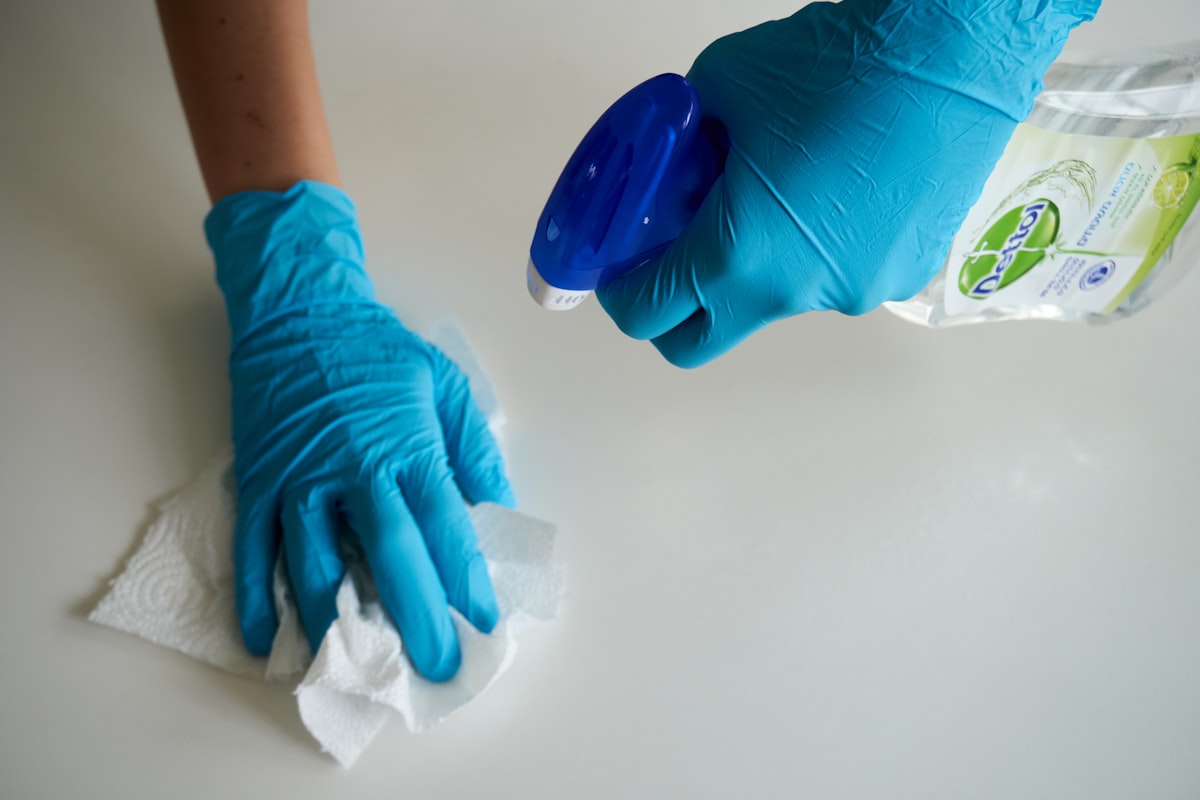
The Turnover Caddy
Your caddy should include everything needed for a single property without returning to your car:
- All-purpose cleaner, glass cleaner, bathroom disinfectant
- Microfiber cloths (color-coded: blue for glass, green for kitchen, red for bathroom)
- Scrub brush, toilet brush, grout brush
- Trash bags (multiple sizes)
- Rubber gloves
- Lint roller (for upholstered furniture and throw blankets)
For a complete breakdown of supplies with specific product recommendations, see our cleaning business supplies guide.
Airbnb-Specific Additions
Beyond standard cleaning supplies, you’ll need:
- Linen sets: Own 2-3 full sets per property (sheets, pillowcases, duvet covers, towels). Swap dirty for clean at each turnover and launder between shifts. This eliminates waiting for laundry on-site.
- Restocking inventory: Keep a supply of travel-size toiletries, coffee pods, trash bags, paper towels, and toilet paper in your vehicle. Buy in bulk from Amazon{rel=“nofollow sponsored”} or a restaurant supply store. Bill hosts monthly for restocking costs plus your markup.
- Lockbox/smart lock access: Keep a log of access codes for every property. Update when hosts change codes. A password manager app works.
- A good phone mount and a Bluetooth speaker. You’re alone in a property doing fast-paced physical work. Efficiency tools matter.
Budget $200-$400 for your initial Airbnb-specific supply kit beyond what you’d already carry for standard residential cleaning. The linen sets are the biggest upfront investment at $80-$150 per set, but they pay for themselves within 3-4 turnovers through the linen service add-on fee. Make sure you’re properly covered before taking on properties — our cleaning business insurance guide covers what policies you need when you have key access to other people’s properties.
Scaling Past 10 Properties
Ten properties is the inflection point. Below ten, you can manage scheduling in your head and handle every turnover yourself. Above ten, something slips: you double-book, a guest arrives before you finish, or quality drops because you’re rushing through back-to-back turnovers.
Scaling requires three changes.
Hire Before You Need To
Start looking for your first hire when you’re consistently running 8-10 properties. Don’t wait until you’re at capacity. Train the new cleaner on 2-3 properties you know well, send them with you for the first week, then let them run those properties solo while you handle the rest. Pay $18-$25/hour depending on your market, or offer a per-turnover rate (typically 50-60% of what the host pays you).
Use Scheduling Software
Manual scheduling breaks at scale. You need software that handles same-day booking changes, assigns turnovers to specific cleaners, and sends automated reminders.
Jobber{rel=“nofollow sponsored”} is the strongest option for Airbnb cleaning operations scaling past 10 properties. Its scheduling dashboard, route optimization, and team assignment features handle the daily volatility of STR turnovers. At $39/month for the Core plan, it pays for itself by preventing a single missed turnover. For a deeper comparison of scheduling tools, see our cleaning business software guide.
ZenMaid{rel=“nofollow sponsored”} is a strong alternative if you’re running a maid service alongside your Airbnb turnover work. Its per-seat pricing ($39/month base plus $14 per cleaner) makes sense for smaller teams, and its cleaning-specific checklists map well to turnover workflows.
Build Quality Systems That Work Without You
According to Hostfully’s guide on turnover management, the number one reason cleaners lose STR accounts is inconsistent quality — not poor cleaning, but variation between visits. The fix is documentation.
Create a photo-based checklist for each property showing exactly how every room should look post-turnover. Include staging details: where the throw pillows go, how the towels are folded, where the welcome card sits. When a new cleaner picks up that property, they have a visual standard to match, not a text list to interpret.
Run spot checks on 10-15% of turnovers weekly. Drive by after your cleaner finishes, walk the property, and photograph anything that doesn’t match the standard. Share the feedback immediately while the turnover is fresh.
Route Optimization
With 15+ properties across a metro area, drive time eats your margin. Group properties geographically and assign them to specific cleaners. A cleaner handling five properties within a three-mile radius is more profitable than one driving across town between turnovers. Jobber’s route optimization feature handles this automatically — it’s one of the main reasons STR cleaning operations choose it over simpler tools.
Get the Free Airbnb Turnover Checklist
We’ve turned the 45-minute checklist from this guide into a printable PDF you can laminate and keep in your caddy or share with new hires. It includes the room-by-room sequence, restocking inventory list, and a post-clean photo log template.
Download the free Airbnb Turnover Checklist PDF
Ready to streamline your turnover scheduling? Start your free Jobber trial{rel=“nofollow sponsored”} and manage same-day bookings, team assignments, and client invoicing from one dashboard.
verified Editor's Tip
Bookmark this guide and revisit it as your business grows — different sections become relevant at different stages.
Quick-Reference Overview
| Metric | Industry Average | Top Performers |
|---|---|---|
| Client Retention | 60-70% | 85%+ |
| Profit Margin | 10-15% | 25-35% |
| Employee Turnover | 200%+/yr | <75%/yr |

Top Cleaning Software
Explore our curated reviews of the best software tools for cleaning businesses.
View Full Review arrow_forwardGet More Guides Like This
Join cleaning professionals who read our weekly industry insights.
No spam. Only high-authority cleaning industry data.
Enjoyed This Guide?
Join cleaning professionals who read our weekly industry insights.


